Precision Medicine Approaches in Dermatology

Precision Medicine Approaches in Dermatology的核心信息是什么?

Prof. Michel Gilliet University Hospital of Lausanne A precision medicine approach is a powerful diagnostic support for inflammatory skin diseases that allows an individualized tre...
Prof. Michel Gilliet University Hospital of Lausanne A precision medicine approach is a powerful diagnostic support for inflammatory skin diseases that allows an individualized treatment choice based on the dominant immune module. Thus, it can provide guidance for the management of non-responders and patients with paradoxical reactions. A true translational revolution can be witnessed in dermatolo... 本文由Michel Gilliet撰写,由EADV主办,属于「拓麦精要」分类。 关键词:EADV、银屑病 、特应性皮炎 、个体化治疗、精准医学。
本文核心问答

Q1: 这篇资讯的核心内容是什么?

Prof. Michel Gilliet University Hospital of Lausanne A precision medicine approach is a powerful diagnostic support for inflammatory skin diseases that allows an individualized treatment choice based on the dominant immune module. Thus, it can provide guidance for the management of non-responders and patients with paradoxical reactions. A true translational revolution can be witnessed in dermatolo...
Q2: 本文属于哪个学科分类,涉及哪些关键词?

本文属于「拓麦精要」分类,涉及关键词:EADV、银屑病 、特应性皮炎 、个体化治疗、精准医学、辅助性T细胞17,由Michel Gilliet撰写,由EADV主办。

Q3: 这篇资讯的发布时间是什么?

本文发布于1697803227,来源为TalkMED拓麦医学资讯平台。

作者学术资质

Michel Gilliet,就职于University Hospital of Lausanne,所属科室:皮肤性病科,职称:其他。

主办单位:

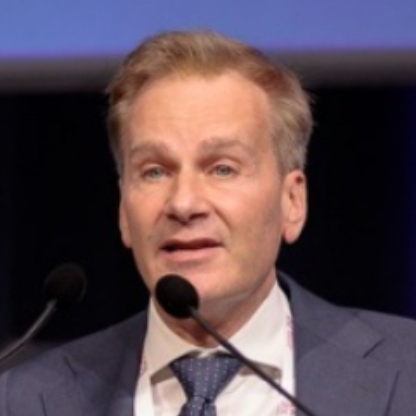
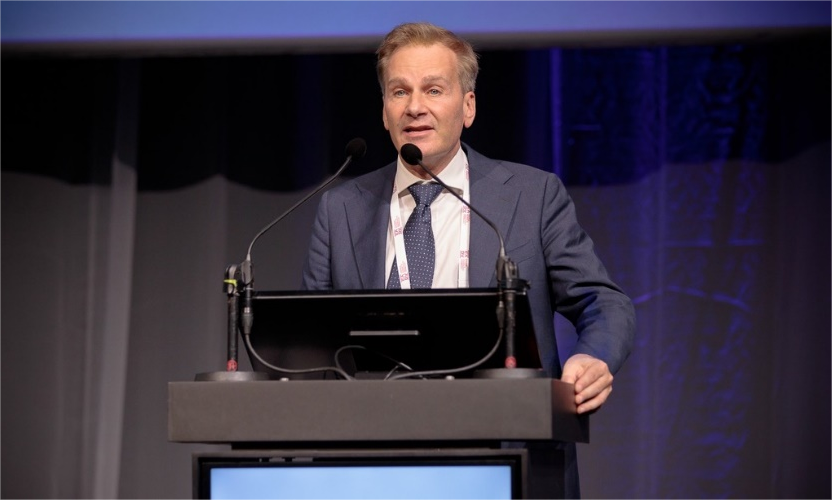
Prof. Michel Gilliet

University Hospital of Lausanne
 

A precision medicine approach is a powerful diagnostic support for inflammatory skin diseases that allows an individualized treatment choice based on the dominant immune module. Thus, it can provide guidance for the management of non-responders and patients with paradoxical reactions.


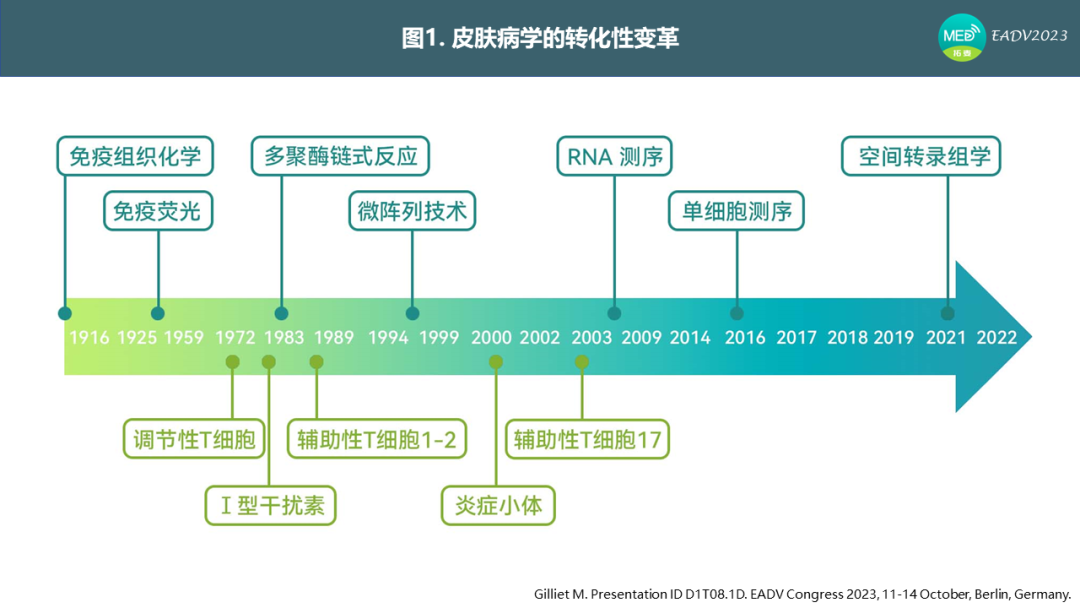
A true translational revolution can be witnessed in dermatology with development of many targeted therapies, which has been possible due to novel ways of analysing the tissue (figure 1). Detection of immune pathways has been key to develop targeted therapies.


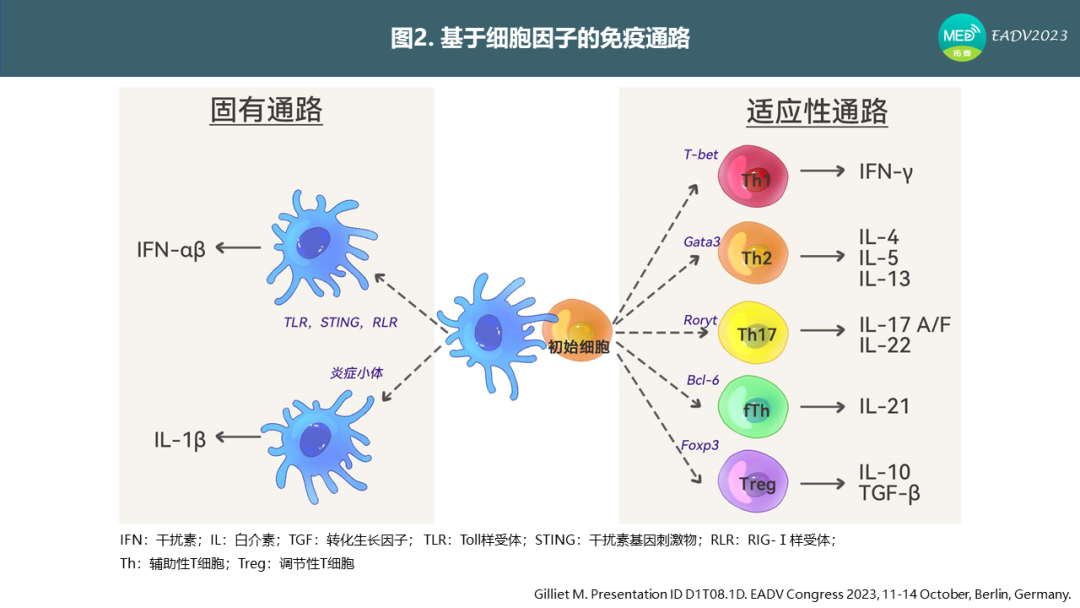
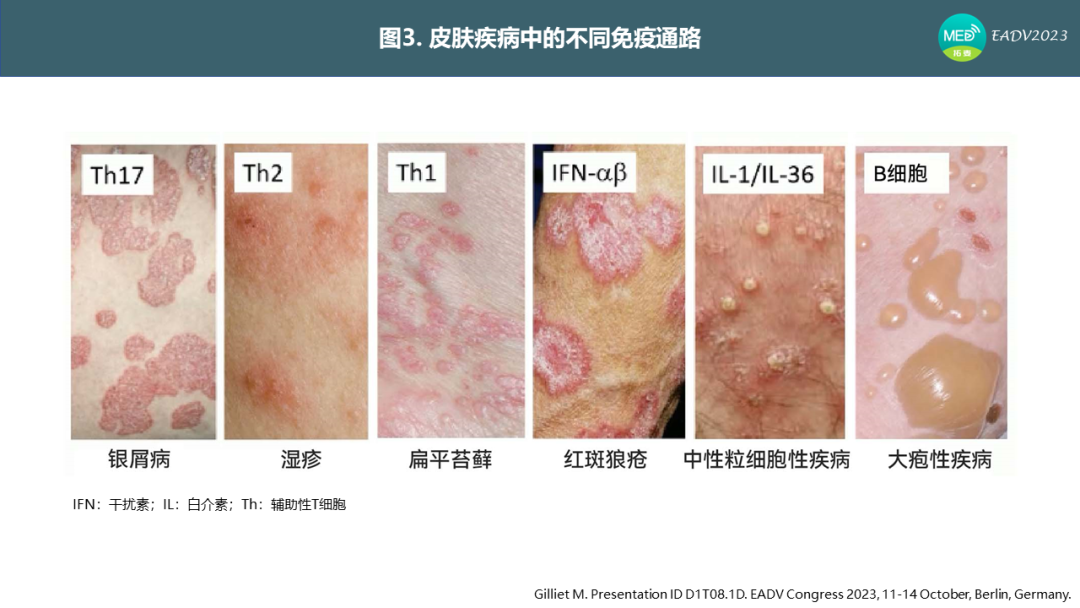
T-cells can differentiate in different subsets (Th1, Th2, and others). On the other hand, there are innate pathways driven by dendritic and other immune presenting cells and a second pathway that is driven by inflammasome activation (figure 2). “These are simplified core immune pathways that are directly associated with certain skin diseases”, Prof. Gilliet, Université de Lausanne, Lausanne (Switzerland) explained (figure 3).


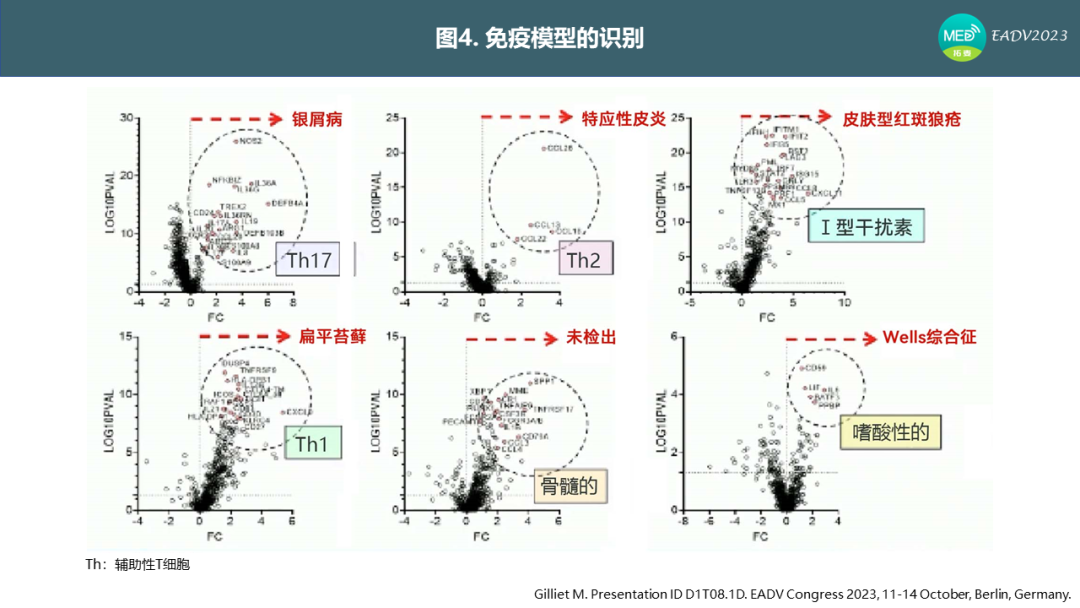
“Although targeted therapies give some very efficacious responses, there are still some non -responders”, Prof. Gilliet said. It is not known, whether a wrong immune pathway is targeted, or whether there are immune escape pathways or even paradoxical reactions. To answer this question, Prof. Gilliet and his team started to use a precision medicine approach in all patients with inflammatory skin diseases.  They take 4-mm skin punch biopsies from skin lesions, perform RNA extraction and probe hybridisation for transcriptional profiling: As a result, different immune modules can be identified (figure 4). “What we came up to is that in psoriasis there are predominantly Th17 genes whereas if we do this for atopic dermatitis (AD) we come up with Th2 related genes or type I IFN genes in cutaneous lupus”, Prof. Gilliet said. These immune models can be used to identify diseases.


According to Prof. Gilliet´s experience, these immune models help to improve the diagnosis of inflammatory skin diseases. In his department, only 61% of patients can be diagnosed clinically, 85% if a histological examination is performed. However, when a molecular signature is added to the clinical examination and histology, the predictive value of the diagnosis is 100%.


At the end of the lecture, Prof. Gilliet presented three case reports that highlight the clinical consequences of a precision medicine approach in dermatology.


Case report 1

A patient with three episodes of erythroderma


An 86-year-old man presented with a 3rd episode of erythroderma. Previously, he had shown a history of drug reaction to a botanical drug, but he had no personal history of atopy. “We used our personalized approach in this patient and saw a clustering with AD, and a dominant Th2 profile. Based on the Th2 profile he was treated with dupilumab, and he responded excellent. This was the first example how successful such a personalized approach can be”, Prof. Gilliet stated.


Case report 2

A patient with severe, refractory psoriasis


A 63-year-old man with severe longstanding psoriasis was resistant to different therapeutic options. He did not respond to conventional therapy (methotrexate, fumaric acid), nor to apremilast or cytokine blockers (both anti-IL-17 and anti-IL-23). A biopsy of the lesions looked histologically like psoriasis. However, the personalised approach revealed that he clustered with Th17, but also had a dominant Th2 cluster.


As Prof. Gilliet explained, this was the rationale to treat the patients with dupilumab, to which he showed an excellent response after only one dose.


Case report 3

A patient with adult-onset atopic dermatitis


Another 77-year-old male was treated with dupilumab but flared after the first three injections. The personalised approach performed before therapy revealed a Th2 profile. After dupilumab failure, the personalised approach was repeated: in this examination, the patient had a dominant Th1 profile. “We noticed this in a couple of patients. Obviously, there is a Th1 escape in non-responders to Dupilumab”, Prof. Gilliet explained. The patient was then treated with a JAK1/2 inhibitor (abrocitinib). After 4 weeks of treatment, he had a complete response.


A personalized approach is also important in the context of so-called paradoxical reactions under targeted therapy: about 5,8% of anti-IL17A -treated patients get eczematous skin lesions. “Once we profile these lesions, we get a clear Th2 profile indicating a switch from Th17 to Th2”, Prof. Gilliet explained.


“I think in all these cases [of immune switches] the optimal new treatment is a JAK1/2 inhibitor that blocks a broader spectrum”, Prof. Gilliet concluded.


1

END

1

Source: Gilliet M. Precision medicine approaches in dermatology. Presentation ID D1T08.1D. EADV Congress 2023, 11-14 October, Berlin, Germany.


引用格式:Precision Medicine Approaches in Dermatology. 发布日期:1697803227. 来源:TalkMED拓麦. URL: https://portal.talkmed.com/news/534

2023-10-20

分享

收藏

点赞

媒体矩阵
  • 拓麦TalkMED
  • 拓麦精要
  • 拓麦Derm
  • 拓麦Neurol
  • 拓麦Diabetes
  • ONCO前沿
  • 血液前沿
  • 血管资讯
  • MED WIKI
  • 三七二十e
下载桌面应用
苹果应用下载
安卓应用下载