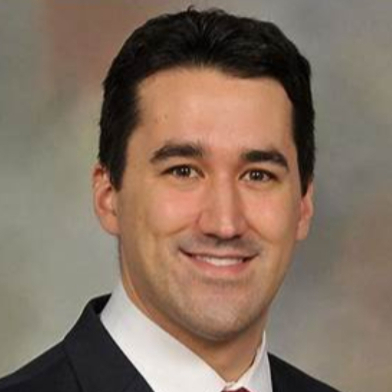
我是 Aaron Farberg 博士,现居美国得克萨斯州达拉斯县。我正在法国巴黎的 EADV 2025 现场,想和大家分享这次主题演讲的内容,以及我将在巴黎展示的一项研究数据。这项研究是我主导开展的,旨在探究各类压力因素 —— 这里所说的压力因素包括环境以及生活方式 —— 对敏感皮肤和非敏感皮肤的实际影响。虽然这是一项初步试点研究,但样本量并不小,实际纳入了超过150名患者。这项研究是在哪个国家开展的呢?在中国!在众多地区中选择中国,让这项研究更具参考意义。我们选取了中国两座不同的城市,第一座是广州,众所周知,广州是一座一线城市,节奏很快,就像巴黎、纽约一样,人们压力大、睡眠不足,还存在污染问题,这些都是大家对一线城市的典型印象。我们将广州与节奏更舒缓的城市 —— 厦门的受试者进行对比,当然,厦门本身也是一座繁忙的城市,但当地居民睡眠时间更充足,生活更放松,整体生活质量也略高一些。
随后,我们将皮肤敏感的受试者与皮肤非敏感的受试者进行对比,从整体数据来看,我们发现存在多种驱动因素,包括炎症、氧化应激,以及整体皮肤色素沉着的发生。而这些指标的差异,不仅与受试者的生活方式相关,还与他们是否属于敏感皮肤人群有关。在某些情况下,例如炎症的发生,不仅取决于患者是否为敏感皮肤,还与环境相关,本质上就是我们选择的生活环境和生活方式。为什么这项研究如此重要呢?因为到 2050 年,我认为全球三分之二的人口将生活在人口密度高、生活压力大的城市中,因此了解并研究生活方式对皮肤的影响至关重要。这项研究的另一个重要意义在于明确 “敏感皮肤” 的定义,敏感皮肤并非人人都有,也不是难以界定的概念,事实上,我们完全可以对其进行定义和研究,因为越来越多的人正受到皮肤敏感问题的困扰。实际上,近三分之二的人甚至更多人存在不同程度的皮肤敏感问题,作为临床医生,我们必须重视这一现象,这样才能更好地为患者提供治疗,同时探索更合适的治疗方案,以及其他可供患者选择的治疗手段。
我想分享一些令人瞩目的有趣研究,是我在 EADV 2025 上发现的。目前大家讨论最多的话题之一,是用于治疗银屑病的口服 IL-23 抑制剂 Icotrokinra,这个名称我几乎没法快速念十遍!这是一种新型口服肽类药物,简单来说,研究人员正在将过去需要皮下注射的药物,改造为高效且安全性高的、用于治疗银屑病的 IL-23 抑制剂口服肽类药物。现在,我们终于能为患者提供两种选择,包括一种是高效的注射剂,另一种则是口服药片。另一项令人振奋的研究进展是特应性皮炎领域的部分数据,该领域出现了一种新型分子,能够延长 IL-20 或 IL-13 抑制剂的半衰期。大家可以思考一下,这意味着我们能优化患者的注射治疗方案,以往患者每两周需要注射一次,未来或许每三个月(每季度)注射一次就足够了。由此可见,患者现在有了新的治疗选择,能够根据自身情况找到最适合自己的治疗方案,依据他们的生活方式进行方案选择。
那我们就把话题转向皮肤癌,该领域目前存在哪些未被满足的需求呢?作为一名莫氏外科医生,我们当然擅长手术操作,也擅长通过手术切除癌症病灶,但我真心希望到 2050 年甚至更早,我们能减少手术的使用频率。理想情况下我们希望有更多的药物治疗方案,比如局部用药、输液治疗或注射治疗等。这正是该领域未被满足的需求所在,我们需要切实改进皮肤癌的药物治疗方案。其实,肿瘤学领域已经在朝这个方向发展了,我们正在使用帕博利珠单抗或西米普利单抗这类药物,但如果能将这些药物应用于常见的皮肤癌类型,比如非黑色素瘤皮肤癌、基底细胞癌,还有鳞状细胞癌,会怎么样呢?目前已有多项研究在探索西米普利单抗的病灶内注射方案 —— 即直接将药物注射到鳞状细胞癌病灶中,未来或许也能用于基底细胞癌的治疗。想象一下,患者只需来我们诊所接受几次注射,就能完成皮肤癌的治疗,无需手术切除病灶,无需承受手术相关的并发症,我们依然能为患者提供有效的治疗。
"I'm Dr. Aaron Farberg, based in Dallas, Texas, in the United States of America. And I'm here live at EADV 2025 in Paris, France. And I wanted to share with you the keynote speech, the data I'm going to be presenting here in Paris, and it was a study that I performed looking at how various stress factors—we're talking about the environment, our lifestyle—can really impact sensitive skin and non-sensitive skin. Now, this was a pilot study, although it wasn't really small, it was actually over 150 patients. And where was it based? In China. Well, of all places—so this is even more relevant. And we're looking at two different cities, the first was Guangzhou, which, as we know, is a tier-1 city, very busy—just like Paris, just like New York—people are stressed, they're not sleeping, there's pollution, it's all the things you'd expect from a tier-1 top city. And we compared it to subjects in a more relaxed city: Xiamen, which, again, is still a very busy city, but you get a little bit more sleep, a lot more relaxed, and the quality of life is a bit better.
And then we took subjects with sensitive skin, and compared them to subjects with non-sensitive skin, and across the board, what we found was that there are various drivers of inflammation, oxidative stress, as well as just overall skin pigmentation. And the differences mattered not just by the lifestyle that these subjects had, but also whether or not they had sensitive skin. In some cases, for example, inflammation was driven not just by whether or not a patient had sensitive skin, but also our environment—essentially the lifestyle that we chose to live in. Why is this all so important? Well, by 2050, I think two-thirds of the entire world's population is going to be living in one of those highly dense, highly stressful-type cities, and so it's really important we understand and study the impact that our lifestyle has. Another important aspect of this research is really defining sensitive skin. It's not just something we all have, or something that's difficult to define. No, we really can actually define it and study it, because more and more people are actually dealing with this condition. Really, almost two-thirds even beyond are having some sort of skin sensitivity. And we, as clinicians, need to take that into account, so that we can better treat these patients and also identify therapies, as well as other treatment options for our patients.
Exciting interests that are exciting studies that I've come across while here at EADV 2025. One of the big topics that everyone is discussing is an oral IL-23 for psoriasis, Icotrokinra. Can not almost say that 10 times fast! It's a new, novel oral peptide. Essentially, they're now taking what otherwise used to be subcutaneous injections and turning them into highly efficacious, and of course highly safe, oral peptide versions of an IL-23 inhibitor for psoriasis. Now, we're going to truly be able to offer our patients the option of both: an injection that is highly efficacious, as well as an oral pill. Another exciting release has been some of the data in atopic dermatitis. There's a novel molecule there that has now extended the half-life of an IL-20 or an IL-13 inhibitor. And when you think about being able to maximize the injection protocol for these patients instead of an injection every two weeks, imagine you get it once a quarter, every three months. Again, you can see that there are new options for these patients to really identify what the treatment regimen that's going to be best for them based on their lifestyle.
So shifting our focus into the topic of skin cancer, what's the unmet need there? Well, as a Mohs surgeon, we always love to operate, and we love to cut out cancer. But I sure hope that by 2050, or hopefully sooner, we're doing less and less surgery. I know ideally we'd rather have medical treatments, medical options—whether it be topicals, infusions, or injections. And that's where I think the unmet need is: we need to really improve our medical therapies for skin cancer. That's already happening in the oncology space. We're utilizing drugs such as Pembrolizumab or Cemiplimab. But what if we could actually use those in our run-of-the-mill skin cancers: our non-melanoma skin cancers, our basal cells, our squamous cells? And there are ongoing studies utilizing Cemiplimab in an intralesional way—where you're injecting it into the squamous cell, or perhaps in the future, a basal cell. And patients—imagine they'll come into our office, we do these injections a few times, and that's your treatment for skin cancer. Now you don't have to cut it, you don't have to deal with all that morbidity, and we're still able to treat our patients."